Laser in Medical Technology

High-Precision Laser Welding for Medical Device Manufacturing

The manufacturing of medical device components (also known as Medical Device Manufacturing, or MDM) places special demands on production processes: extremely small parts, sensitive materials, biocompatible metals and strict regulatory requirements. ALPHA LASER has established itself as a trusted partner for high-precision laser welding in the medical sector. Our laser welding systems The result: pore-free, smooth surfaces that meet the highest standards in medical technology.

ALPHA LASER laser systems create strong weld joints that maintain the biocompatibility of the material even when welding additives are used. In addition, laser welding produces gas-tight seams without inclusions or irregularities, suitable for high-temperature sterilisation.

Close-up of medical needles – detail view
(Microscopic close-up of a clean weld seam on a medical needle.)

Benefits of laser welding medical devices:

  • Extremely precise, localized heat input
  • Focusable fiber lasers and Nd:YAG laser sources
  • Fine, distortion-free seams on delicate components
  • Smooth, pore-free surface finishes
  • Suitable for high-temperature sterilization
  • Maintains material biocompatibility
  • Excellent corrosion resistance
  • Ergonomic laser workstations for operator comfort
  • Calibrated optical concepts for micro-assemblies such as endoscopes and implant joints


Advantages
Download our exclusive paper on medical technology now
MDM Brochure


Applications and Laser-Based Solutions in Medical Manufacturing

Modern medical manufacturing faces challenges such as micrometer accuracy, biocompatible special alloys, and certified process reliability. ALPHA LASER’s advanced laser welding technology combines integrated optics with high-precision XYZ-motion systems to meet these exacting standards. With over 30 years of experience, our AL systems are trusted worldwide – from titanium implants and surgical tools to catheters and micro-endoscopic parts.

Pulsed Laser Welding for Delicate Medical Components

Thin-walled or microscopic geometries in medical devices require processes that deliver consistent, distortion-free results. Traditional methods often cause overheating and deformation. Pulsed laser welding for medical devices solves this through short, precisely controlled energy bursts that form clean, stable weld pools while protecting surrounding material.

Pulsed vs. Continuous Wave

  1. Peak Pulse Power
  2. Pulse Duration
  3. Pause 
  4. Average Power
  5. Pulse Energy
  6. CW Power 

Advantages of pulsed laser welding:

  • Low heat input
  • Reduced thermal distortion
  • Clean, controlled energy delivery
  • Perfectly tuned processes from the start
Advantages
Close-up of a brush with a 0.1 mm welding area
(Close-up of a brush with a 0.1 mm welding area)
Cross-section of a laser weld seam
(Cross-section of a laser weld seam)

Precision welding for highly accurate workflows

Our laser systems achieve welds down to 0.1 mm and below with consistent part-to-part repeatability. Each spot weld occurs exactly where expected, producing seam lines so fine they could pass as etchings. This level of precision is ideal for the most delicate components in medical device manufacturing and makes laser welding the gold standard in production.


Welding High-Tech Materials

Medical technology is increasingly relying on advanced materials that offer exceptional properties. However, these special alloys place unique demands on the welding process and are significantly more challenging to work with than conventional engineering materials. High-tech materials require precisely tuned laser parameters, specialized shielding-gas atmospheres, and adapted surface preparations.

Through practical applications in certified ISO 13485 production environments, ALPHA LASER has gained valuable expertise in this field over many years. The process parameters developed by our experts have been tested and validated in real manufacturing scenarios, ensuring reproducible results that meet the highest quality requirements. Numerous MDM companies already rely on our laser technologies in their daily production.

Laser Welding Nitinol

Nitinol, known for its shape-memory and biocompatibility, is a key material in laser welding medical devices such as stents and micro-implants. Pulsed laser welding offers unique advantages:

  • Ultra-fine focusing for clean, precise seams
  • Minimal heat-affected zone
  • Adjustable parameters for hybrid material joints
  • High biocompatibility – no solder or flux required
Laser welding Nitinol
(Laser welding Nitinol)

Laser Welding Titanium

Titanium remains the leading implant material in medical technology, yet it demands exceptional process control. ALPHA LASER has developed optimized welding profiles that ensure stable seams, oxygen-free shielding, and reproducible surface quality.

Key aspects of titanium laser welding:
• Shielding gas (e.g., argon) to prevent oxidation and cracking
• Absolute surface cleanliness to avoid contamination
• Efficient thermal management for stable temperature distribution

Cleanroom-Compatible Laser Welding Solutions

Medical device manufacturing often requires production in controlled cleanroom environments, where strict limits on particle emission and airflow are essential. ALPHA LASER systems can be configured for fanless cooling, low-noise operation, and cleanroom-compatible industrial design, making them ideal for ISO-certified production areas.

Cleanroom laser welding
Cleanrooms require fully enclosed architectural structures and must comply with stringent cleanliness standards. Using clean-air technology, airborne particles are continuously filtered, and all personnel and materials enter the cleanroom exclusively through airlocks.
Laser welding is particularly suitable for cleanroom operations, as it enables contamination-free processing without open flames, sparks, or spatter. The laser process generates virtually no particles and offers such high precision that post-processing is rarely necessary—minimizing the risk of recontamination.

Cleanroom Welding

Cleanrooms or white rooms, and the personnel and materials entering them, are also subject to cleanliness guidelines. In contrast to a full cleanroom, however, airlock systems and clean-air technology are not required. A white room is less expensive to operate than a cleanroom and allows more flexibility for production and welding processes. The advantages of laser welding in a cleanroom apply equally to a white room.


Process Stability

Consistent welding quality over long production cycles is non-negotiable in medical manufacturing. Even individual quality deviations can result in costly re-validations. ALPHA LASER developed the WINLaser® 5 control system specifically for these requirements, offering comprehensive process monitoring with OPC UA interface support for modern production environments and Industry 4.0. In combination with stable fiber laser sources, this creates documentable and scalable production processes.


Fields of Application & Examples of Laser Use in Medical Technology

The range of possible applications for laser welding in medical technology has expanded significantly in recent years and today covers almost all areas of medical device and component manufacturing. From life-saving implants to precise diagnostic instruments, laser welding technology enables the production of complex medical devices:

  • Implantable medical devices: Pacemakers, cochlear implants, neurostimulators, and implantable defibrillators benefit from hermetic laser welds that ensure long-term reliability inside the body.
  • Surgical instruments: Laparoscopic tools, microsurgical instruments, and endoscopes require weld seams that ensure optimal functionality and sterilizability.
  • Minimally invasive systems: Catheters, intravenous lines, and stent systems use laser welding technology to join miniaturized components.
  • Diagnostic devices: Sensors, chips, and electronic assemblies in medical analysis devices are joined through precise laser welding.
  • Dental medicine: Dental implants, orthodontic appliances, and dental instruments benefit from biocompatible and precise weld joints.

Two case studies demonstrate concrete applications of ALPHA LASER technology in medical fields:

Case Study 1 – Stent Welding

Stents made from ultra-thin Nitinol wires are among the most demanding medical device components. Their self-expanding design requires exceptional precision. The ALV 150 F system from ALPHA LASER provides validated, traceable welding performance for these critical implants.

Case Study 2 – Établissements Charles PERY & Cie

The French orthopedic supplier integrated ALV 150 and AL-Q 150 F systems in its cleanroom facility. The result: higher productivity, faster setup, simplified programming, and improved efficiency – proof of ALPHA LASER’s reliability as a long-term partner in medical laser welding.

Download our exclusive paper on medical technology now
MDM Brochure

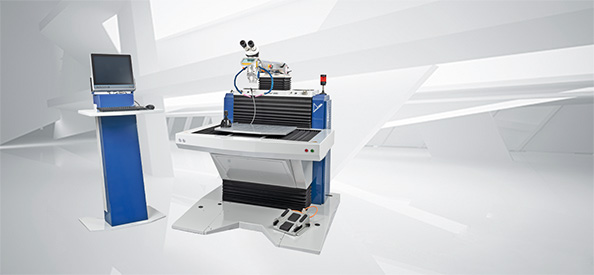
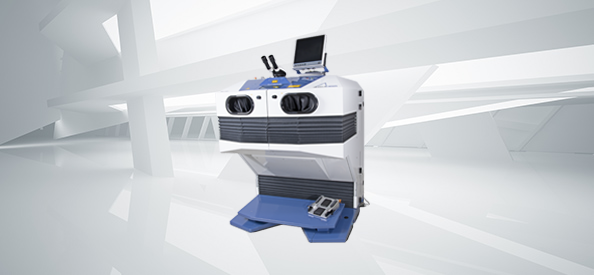
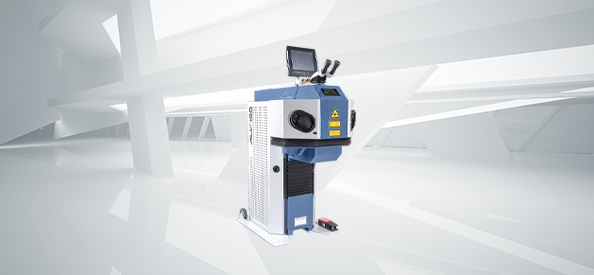
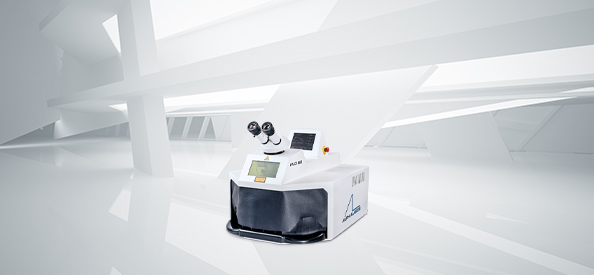
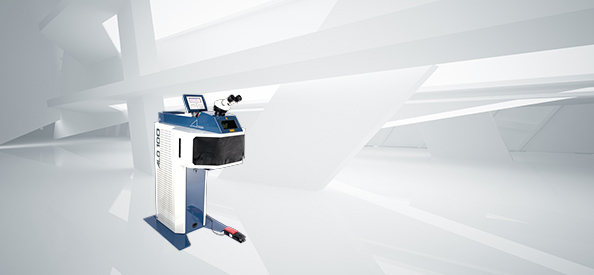
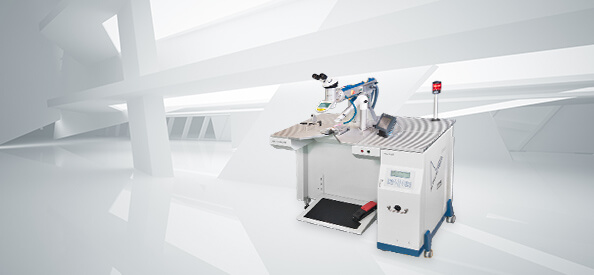
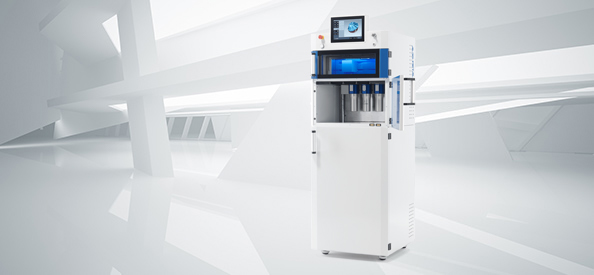
MDM Welding Systems from ALPHA LASER

Contact Us

Contact Us

 
Subscribe to newsletter
+49 (0)89 890237-0
Contact form